A bedroom heated by one PowerBoard panel costs about 39p a day on the worked example below: about 5 hours of heating, at 27p a unit. What decides your bill is not the panel. It is how many rooms you heat, for how many hours, and what you pay for each unit.
Here is the working, so you can check it against your own home.
The short version
- A bedroom, about 39p a day. One 750 watt panel in a room of around 10 square metres, heated about 5 hours a day, at 27p a unit. A modelled estimate, worked out below.
- The thermostat does the saving. A panel draws full power while the room warms up, then switches on and off to hold the temperature.
- With a home battery, about 21p a day for the same room, if the battery is charged overnight at around 13p a unit.
- Against other electric heaters, same price per unit, better control. A thermostat in every room and warmth from the ceiling.
- To buy: a 750 watt panel is £334.80 including VAT, supply only, and suits a room of around 10 square metres in a reasonably insulated home.
What a room costs
The sum is simple, and you can do it with your own figures.
A panel uses its wattage while it is drawing power. At full output a 750 watt panel uses three quarters of a unit an hour, about 20p at 27p a unit. A 250 watt panel is about 7p.
It does not draw full power all the time. Switch it on when you come in and it reaches full output in under 10 minutes. Once the room is up to temperature, the thermostat switches it off, and back on for a few minutes when it drops a degree. Full power is only for the coldest days. So every figure we publish uses the same basis:
- About 5 heating hours a day: an hour or two in the morning, the main block in the evening.
- Panels drawing power about 38.5% of that time, because the thermostat cycles them. This is our modelled figure; colder homes and colder weather mean more.
- 27p a unit. We keep this rate fixed, set just above Ofgem's price cap when we chose it (26.32p, October 2026).
Worked example: a bedroom of about 10 square metres with one 750 watt panel.
- 0.75 kilowatts x 5 hours x 38.5% = about 1.44 units a day
- 1.44 units x 27p = about 39p a day
- Over a 240 day heating season, about £94 a year
On the same basis:
- A bathroom with one 250 watt panel: about 13p a day.
- A living room of around 18 square metres with two 750 watt panels: about 78p a day.
Heat for longer and it costs proportionally more. Ten hours a day is about 78p for the bedroom. The hours you heat for move the bill more than anything else.
The same room with a home battery
A home battery charges overnight, when electricity is cheaper, and runs the panels in the evening. For homes with a battery and no electric car, overnight rates of around 13p a unit are typical. About 11% is lost in storage, so each unit the battery gives back costs about 14.6p.
| The bedroom above | Per day | Per heating season |
|---|---|---|
| On our standard 27p rate | about 39p | about £94 |
| From a battery charged overnight at around 13p | about 21p | about £51 |
That assumes the battery covers the room's evening heating. Solar PV is the next layer on top, mostly outside the depths of winter. See how they work together on our solar and infrared page.
Against other electric heating
Every electric heater turns one unit of electricity into one unit of heat. An oil filled radiator, a fan heater, a convector, a storage heater and a ceiling panel are all level on that measure, so no electric heater costs less per unit than another.
What changes the bill is how the heat is delivered and controlled:
- A thermostat in every room. Each room comes on when it is used and stays off when it is not.
- Warmth from the ceiling. A panel warms you and the surfaces around you directly, so less heat goes into the warm air that gathers under the ceiling. UK government research summarises a study where people were as comfortable with the air about 0.6 of a degree cooler (DESNZ, 2025). That only helps the bill if you turn the thermostat down, and our installation manual's advice is that most people can set it a degree or two lower than they would with a radiator.
- Quick to respond. Full output in under 10 minutes, so there is no need to leave it running in advance.
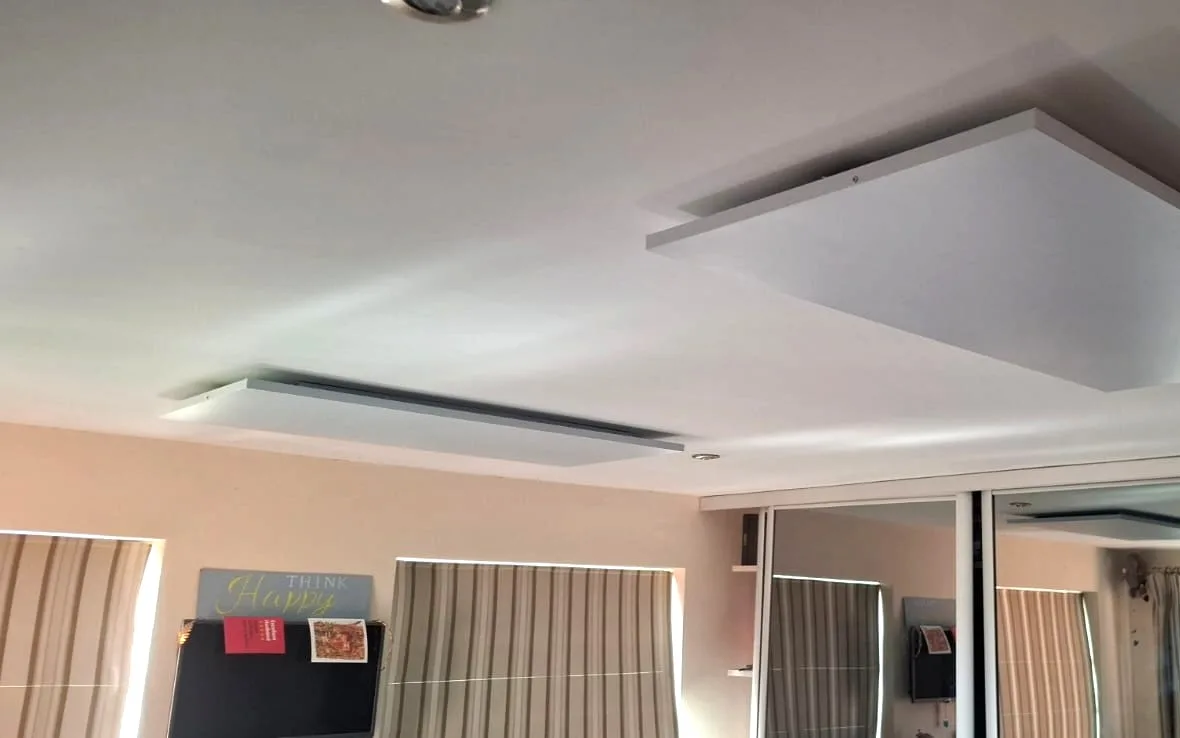
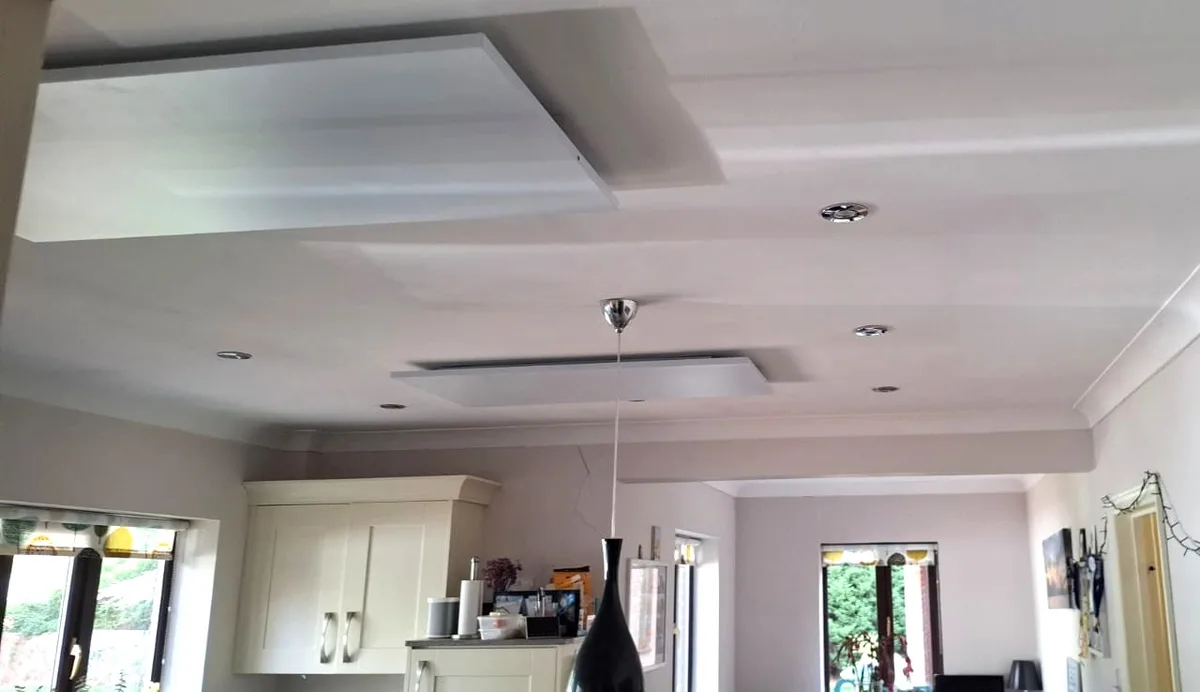
- Nothing on the walls or floor. The panels are on the ceiling, so furniture goes where you want it.
The Energy Saving Trust's view is that a well controlled infrared system will probably cost less to run than standard electric panel heaters, and might cost less than storage heaters or electric underfloor heating, depending on the controls. That matches what we design for: the right panel in each room and a thermostat on each one.
Replacing storage heaters? A storage heater charges on a cheaper night rate, but it releases that heat on its own schedule, often when nobody is home. Panels give the heat when you want it, room by room. A home battery brings the overnight rate back into the picture, as the table above shows.
Against gas and heat pumps
Gas and heat pumps cost less per unit of heat. For a whole house heated all day, every day, they will usually cost less to run, and we will tell you so.
PowerBoard is for the homes and rooms where that is not how heating gets used, or where a boiler or a heat pump is not the right fit: flats, extensions, loft rooms, home offices, homes off the gas grid, and anyone who wants heating with no pipework, no outdoor unit and nothing to service.
What it costs to own
- 750 watt surface panel: £334.80 including VAT, supply only. Suits a room of around 10 square metres in a reasonably insulated home. A cold, solid wall room may need two.
- 250 watt integrated panel: £274.80 including VAT, supply only. Boarded into the ceiling and skimmed over, so it suits a refit, a bathroom or a new build.
- A thermostat for each room: a hardwired WiFi thermostat is £82.80 including VAT.
- Fitting: your own qualified electrician can fit and certify them. If you would rather not find one, ask us and we can put you in touch with an installer from our network.
- Nothing to service: no boiler, no flue, no annual check. A 10 year warranty and a 30 year design life.
Every system we supply is sized from a room by room heat loss calculation, not guessed from the floor area. You can see the range in our store.
Frequently asked questions
Is infrared heating expensive to run?
It depends on how many rooms you heat and for how long. One bedroom with a 750 watt panel costs about 39p a day on our basis: about 5 hours a day, the panel drawing power about 38.5% of that time, at 27p a unit. With a home battery charged overnight, about 21p.
How much does an infrared panel cost to run per hour?
At full output and 27p a unit, a 750 watt panel costs about 20p an hour and a 250 watt panel about 7p. The thermostat switches the panel off once the room is warm, so most hours cost less than that.
Is infrared heating cheaper than electric radiators?
Not per unit: every electric heater turns one unit of electricity into one unit of heat. The Energy Saving Trust's view is that a well controlled infrared system will probably cost less to run than standard electric panel heaters, because the warmth comes from the ceiling and every room has its own thermostat.
Is infrared heating cheaper than gas?
Not per unit. Gas costs less for each unit of heat, and for a whole house heated all day a gas boiler will usually cost less to run. Infrared suits rooms and homes used in parts, homes off the gas grid, and people who want no boiler, no pipework and nothing to service.
Can I run infrared heating from a battery?
Yes. A home battery charged overnight at around 13p a unit can supply the evening heating. For the bedroom above, that brings about 39p a day down to about 21p. Solar PV can be added later as the next layer.
Does infrared heating use a lot of electricity?
A panel uses what its wattage says while it is heating, so a 750 watt panel uses three quarters of a unit for each hour at full output. Over a day, the thermostat and the number of rooms you heat decide the total.
Talk to us before you buy
Book a free remote survey. Send us your plans or photos and we calculate the heat loss room by room, tell you the panel each room needs, and give you a running cost for your rooms on this basis, with the working written down. If the honest answer is to insulate first, that is what you will hear.
Running cost figures are modelled estimates on our standard basis: about 5 heating hours a day, panels drawing power about 38.5% of that time, at 27p a unit. We keep this rate fixed, set just above Ofgem's price cap when we chose it (26.32p, October 2026). Battery figures assume an overnight rate of around 13p a unit and about 11% lost in storage. Your figures will depend on your home, the weather and how you use it.